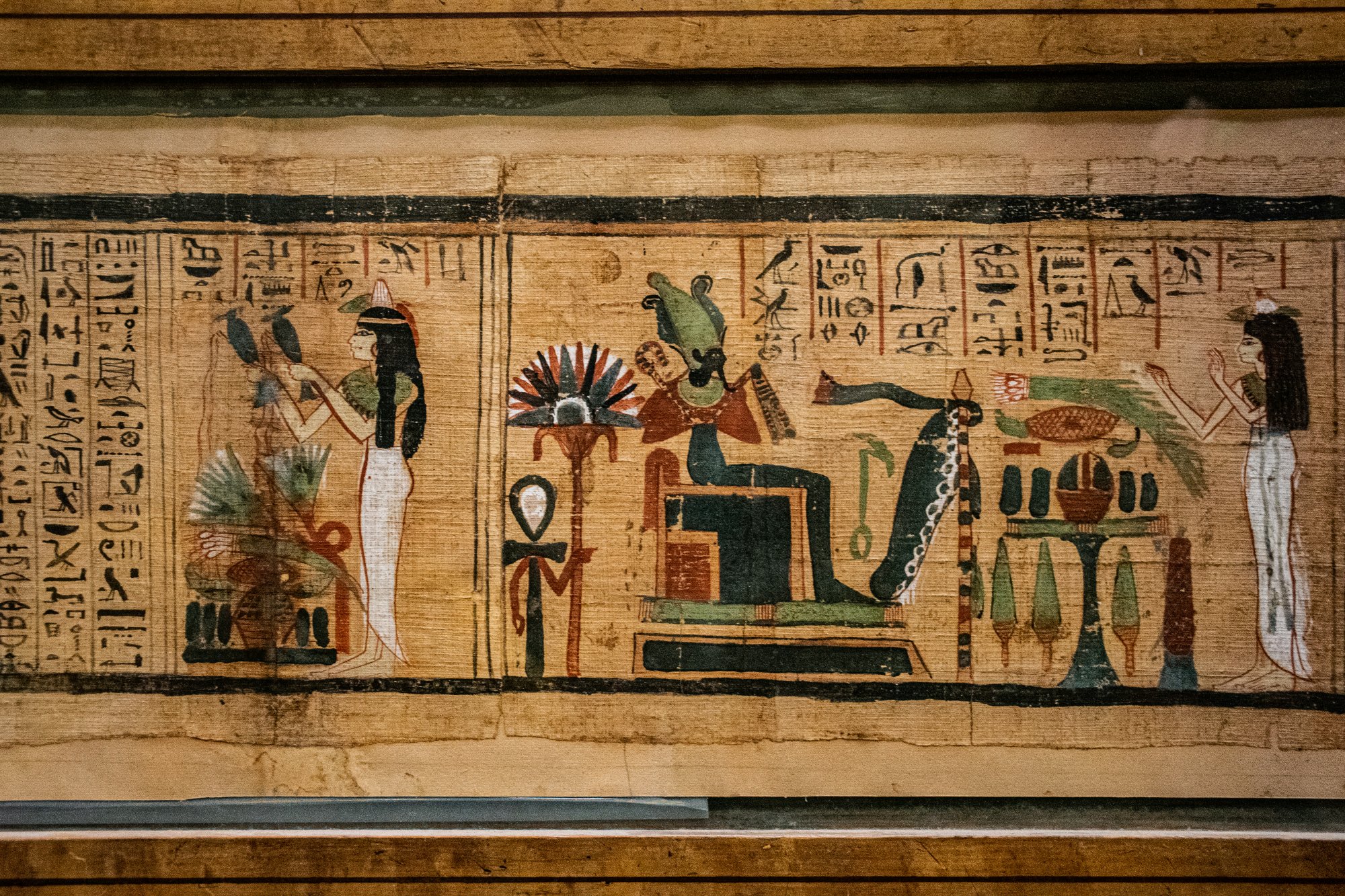
Ancient Egyptian temple columns at Karnak — where dream incubation rituals were performed
𓂀𓇳𓁹𓆃𓋹𓊝
☽ Dream Tradition · Africa & Near East
c. 3100–30 BCE · Africa & Near East

Dreams in Ancient Egypt

The Egyptians believed dreams were gateways to Duat — the underworld and realm of the gods. Sleep was "a little death" during which the soul (Ba) left the body to travel between worlds.

Gateway to Duat

Gateway to Duat

In the temples of Dendera, Deir el-Bahri and Memphis, special "dream chambers" were built where people came to sleep and receive healing dreams from the gods. Priest-interpreters, known as the "Masters of Secret Things" (wab seshta), performed morning readings.

Ritual preparation included fasting, bathing, incense and prayer. The practice of dream incubation — deliberately sleeping in a sacred space to receive divine messages — spread from Egypt to the Greek Asklepieia at Epidaurus, which later adopted and expanded this same model.

"To see yourself in a mirror — a bad dream, a second wife. To drink warm beer — suffering will come. To see a great cat — a good dream, a great harvest."

Dream Papyrus Chester Beatty III, c. 1275 BCE · British Museum ↗
Key Figures
𓁹

Serapis

Graeco-Egyptian god of healing dreams. His temple in Alexandria was the center of dream incubation.

𓃀

Bes

Protective household god. His image placed under headrests to guard sleepers from evil dreams and sleep paralysis.

𓆃

Tutu

God-demon, guardian against nightmares. Protector of the dream realm.

𓋹

Thoth

God of wisdom, patron of scribes and dream interpreters. Later associated with Hermes Trismegistus.

Did you know...

Facts That Will Surprise You

Did you know the world's oldest dream dictionary is over 3,200 years old? The Egyptian Dream Papyrus (c. 1275 BCE) contains over 200 interpretations — "bad" dreams in red ink, "good" in black.

Did you know ancient Egypt had "dream hospitals"? In temples, people slept in special chambers to receive healing dreams. Priests interpreted them in the morning — 3,000 years before psychotherapy.

Did you know the Great Sphinx owes its rescue to a single dream? Prince Thutmose IV fell asleep in its shadow. The Sphinx promised him the throne if he freed it from the sand.

Did you know the Egyptian hieroglyph for "dream" depicts an open eye? In sleep, a different kind of vision opens — the Egyptians knew this millennia before neuroscience.

Key Stories

Dreams That Shaped History

Thutmose IV & the Dream Stela

A young prince fell asleep in the shadow of the Great Sphinx. It appeared as the god Horemakhet and promised him the throne if he freed it from the sand. The Dream Stela still stands between its paws today.

Chester Beatty III — Oldest Dream Dictionary

Over 200 dream interpretations on hieratic papyrus. Surprisingly contextual — some symbols change meaning based on the dreamer's gender. Now at the British Museum.

Temple Dreaming — Dream Hospitals

Special chambers where people slept to receive healing dreams. Epidaurus in Greece later adopted this model and expanded it to 160 beds.

Timeline
c. 1275 BCE
Dream Papyrus — oldest dream dictionary, 200+ interpretations
c. 1401 BCE
Dream Stela — physical proof of a prophetic dream
Ptolemaic era
Serapeum — temple of healing dreams in Alexandria
Related traditions

Explore more traditions

34 dream traditions from around the world

6 continents · 50+ centuries · 200+ fascinating facts

Each dot = one dream tradition · You are here: Ancient Egypt

Dreamed about water, temples, or ancient places?

Let Somniary decode your dream — through the lens of Egyptian dream wisdom and Jungian psychology.

☽ Interpret Your Dream — Free

What did your unconscious write last night?

The Dream Library is the map. Your dream is the territory.

☽ Interpret Your Dream — Free

No account needed · No character limit · Private by design

Last updated: · Maintained by the Somniary editorial team · Sources & References