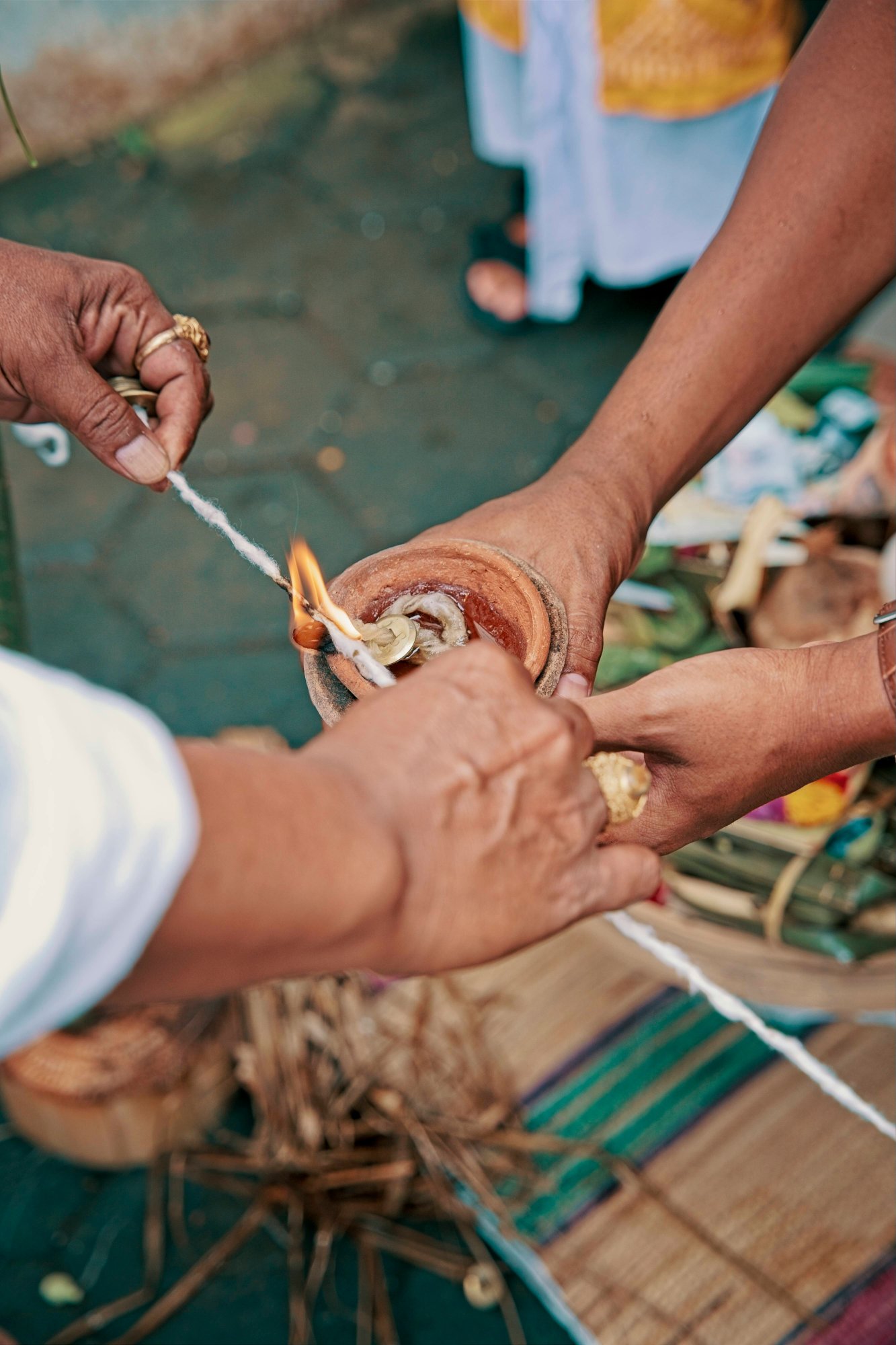
Ritual fire ceremony with hands performing a spiritual offering
◐ Esoteric Traditions · Haiti · African Diaspora

Haitian Vodou & Dreams: When Spirits Command Through Sleep

In Haitian Vodou, dreams are not reflections of the unconscious mind. They are not symbols to be decoded. They are direct commands from the Loa — the spirits who govern the seen and unseen worlds. A dream from a Loa is not optional. It is not metaphorical. It is an instruction that must be followed. Refusing a Loa's dream message is unthinkable.

The Loa

Spirits Who Speak Through Sleep

The Loa (also spelled Lwa) are the spirits at the heart of Haitian Vodou — powerful intermediaries between the supreme creator god (Bondye) and the human world. They are not "gods" in the Western sense; they are more like forces of nature with personalities, preferences, and demands. And they communicate with the living primarily through dreams.

When a Loa appears in a dream, it is not a symbol — it is a visitation. The Loa may deliver healing instructions, warn of danger, demand a specific offering, or call a person to become a manbo (priestess) or houngan (priest). The dream is considered as real and authoritative as a face-to-face encounter in waking life.

This represents a fundamentally different dream ontology from Western psychology. Where Jung would say "the dream figure represents an aspect of your unconscious," Vodou says: "the spirit came to you." The figure is not a symbol of something else — it is itself, present, real, and demanding a response.

Dream healing

Recipes from the Spirit World

One of the most distinctive aspects of Vodou dream practice is the reception of healing recipes through dreams. A manbo or houngan may receive, in a dream from a Loa, a precise recipe for a herbal preparation — including specific plants, quantities, preparation methods, and ritual requirements. These dream-given recipes form a significant part of Vodou's pharmacological knowledge.

This parallels traditions worldwide: Native American healers receive plant knowledge through vision quests. African sangomas are called to their vocation through dreams. Amazonian curanderos diagnose illness through dream visions. The pattern — healing knowledge transmitted through dreams — is among the oldest and most universal in human culture.

Baron Samedi

Baron Samedi: Death's Dream Messenger

Baron Samedi — the Loa of death, cemeteries, and the boundary between life and the afterlife — is one of the most visually distinctive spiritual figures in any tradition. Top hat, tailcoat, skull face, dark glasses, cigar, rum. He is simultaneously terrifying and hilarious — a trickster who guards the crossroads between the living and the dead.

When Baron Samedi appears in a dream, the message concerns mortality, transformation, endings, and the passage between states of being. He may warn of death, demand attention to neglected ancestors, or signal a major life transition. His humor — crude, irreverent, sexually charged — is itself a teaching: death strips away all pretension. At the grave, everyone is equal.

In Jungian terms, Baron Samedi is a fusion of the Trickster and Death archetypes — the figure who disrupts, transforms, and forces confrontation with what you most want to avoid. His appearance in a dream, regardless of your cultural background, carries the same weight: something must end so something new can begin.
The Cheval

Possession as Dreaming: The Cheval Experience

During Vodou ceremonies, a Loa may "mount" a participant — taking temporary possession of their body. The person "ridden" by the Loa is called a cheval (horse). They lose conscious awareness and their body is "used" by the spirit to dance, speak, heal, or deliver messages.

The structural parallel to dreaming is precise: during possession, as during dreaming, the ordinary ego steps aside and another intelligence — whether we call it a Loa or the unconscious — takes control. The cheval, like the dreamer, often has no memory of what occurred. And in both cases, the community treats the experience as meaningful communication from a source beyond the individual ego.

This is the radical claim of Vodou dream theology: your ego is not the only intelligence that can operate through your body and mind. During sleep, as during ritual, other forces speak — and their messages deserve the same respect you would give to a waking encounter with a person of authority.

Did you know…

Facts That Will Surprise You

Did you know in Haitian Vodou, healing recipes are received exclusively through dreams? Priestesses and priests receive precise herbal formulas from Loa spirits during sleep — specific plants, quantities, and preparation methods dictated by the spirit world.

Did you know refusing a Loa's dream command is considered spiritually dangerous? In Vodou, a dream from a Loa is not a suggestion or a symbol — it is a direct instruction that must be followed. Ignoring it risks spiritual illness or misfortune.

Did you know Baron Samedi — Vodou's death spirit — inspired one of pop culture's most iconic villain archetypes? Top hat, skull face, dark humor at the boundary of life and death. His dream appearances signal that something must end so something new can begin.

Recommended reading

Go Deeper

The Sacred and the ProfaneMircea Eliade (1957)

Sacred space, initiation rituals, and cyclical time — the religious dimension of dreams.

View in Sources ↗
The Hero with a Thousand FacesJoseph Campbell (1949)

The monomyth — the universal hero's journey structure found across all dream traditions.

View in Sources ↗
Dictionary of SymbolsChevalier & Gheerbrant (1969)

Encyclopedic reference spanning Egyptian, Greek, Celtic, Hindu, Buddhist, Islamic, and Christian symbolism.

View in Sources ↗
Related traditions

Explore More

What spirit spoke to you in your sleep?

Whether you call them Loa, archetypes, or the unconscious — the figures in your dreams carry messages. Discover theirs.

☽ Interpret Your Dream — Free

No account needed · No character limit · Private by design

Last updated: · Maintained by the Somniary editorial team · Sources & References