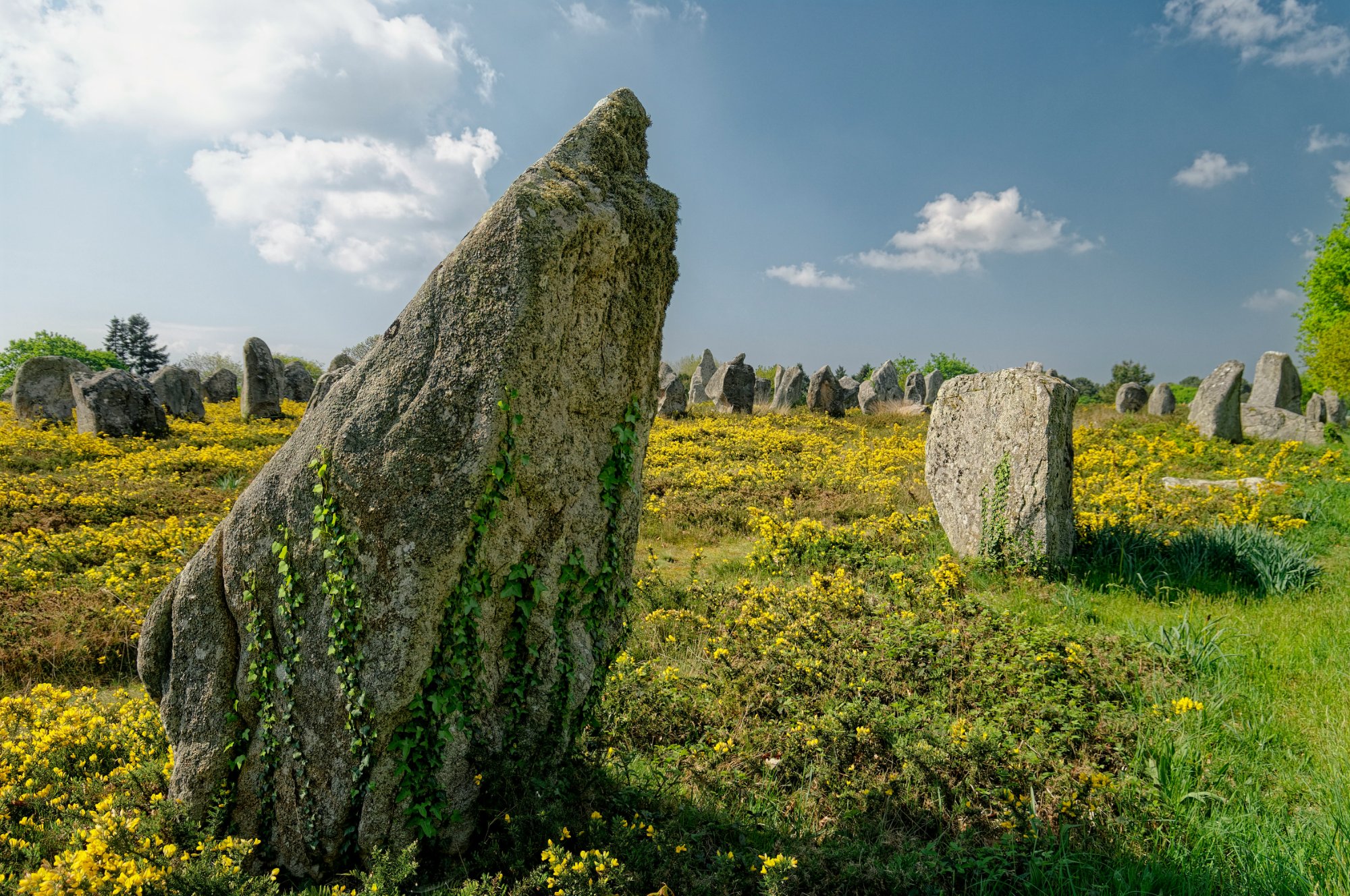
Misty Celtic stone circle in the forest — where druids dreamed the future
◎ Dream Tradition · Western Europe
c. 500 BCE – 400 CE · Ireland, Wales, Scotland, Gaul

Celtic Dreams: Druids, Bull Dreams & Dragon Prophecy

Celtic druids chose kings through ritual dreams. Irish poets entered prophetic trances between their palms. And one young seer's vision of two fighting dragons became the flag of Wales — still flying today.

Ritual dreaming

Imbas Forosnai — Illumination Between the Palms

The Irish tradition knew imbas forosnai — literally "illumination between the palms" — a ritual practice in which a fili (poet-seer) entered a prophetic trance or dream state. The fili would chew raw meat, place his palms over his eyes, and sleep. In this darkness, visions of the future would come.

This was not mere divination — it was an entire institution. The fili held a rank comparable to a king in early Irish society. Their prophetic dreams carried legal weight. A fili's dream-pronouncement could settle disputes, name heirs, and avert wars.

The practice was so powerful that St. Patrick reportedly banned it as incompatible with Christianity — one of history's earliest attempts to suppress dream culture. Yet the tradition survived in folk practice for centuries.

King-making

Tarbfeis — The Bull Dream That Chose Kings

The most dramatic Celtic dream ritual was the tarbfeis (bull feast). When Ireland needed a new High King, a druid was wrapped in the hide of a freshly sacrificed bull and placed to sleep. In his dream, the identity of the next rightful king would be revealed.

The ritual combined sacrifice, sensory deprivation, and prophetic sleep — a formula found across cultures from Egyptian temple incubation to Aboriginal Dreamtime practices. The bull's hide served as a portal between worlds — the dreamer literally wore the skin of the sacrifice.

"The druid was wrapped in the hide of the slain bull and slept. In his dream, the next king of Ireland was revealed."

— On the tarbfeis ritual, from early Irish literary tradition
Prophecy

Merlin and the Dragons of Dinas Emrys

In Welsh tradition, King Vortigern attempted to build a fortress at Dinas Emrys — but the walls kept collapsing. His advisors said he needed to sacrifice a fatherless boy. The young Merlin (Myrddin) was brought, but instead of dying, he revealed the true cause: two dragons fought in a pool beneath the foundations.

The red dragon symbolized the native Britons (Wales). The white dragon represented the invading Saxons. Merlin prophesied the red dragon would ultimately prevail.

This dream-vision is not merely legend — it is living national identity. The red dragon has been the symbol of Wales for over 1,500 years and remains on the Welsh flag today. One of the very few cases where a prophetic dream became a modern national emblem.

Did dragons visit your dreams?

Symbols of power, transformation, and hidden knowledge — our AI interprets them in your personal context.

☽ Interpret Your Dream
Key practices

Druidic Dream Culture

Imbas Forosnai

"Illumination between the palms" — prophetic trance state of the fili (poet-seers). Banned by St. Patrick as pagan practice.

Tarbfeis

Bull feast ritual — druid sleeps in a bull hide to dream the identity of the next High King. Political destiny decided in sleep.

Fili

Poet-seers who held the rank of kings. Their dream-pronouncements carried legal weight — settling disputes and naming heirs.

Aislinge (Dream Poems)

An Irish literary genre where a beautiful woman appears in a dream, representing Ireland herself — dreaming as political allegory.

Did you know…

Facts That Will Surprise You

Did you know the Welsh flag has its origin in a prophetic dream? According to legend, the young Merlin had a vision of two dragons — red and white — fighting beneath the earth. The red dragon symbolizing Wales has been on the flag for over 1,500 years.

Did you know ancient Celts chose their kings based on dreams? In the tarbfeis ritual, a druid was wrapped in the hide of a sacrificed bull and slept. In his dream, the identity of the next king was revealed — political destiny decided in sleep.

Did you know St. Patrick banned an ancient Irish dream practice? Imbas forosnai — "illumination between the palms" — was so powerful that Patrick declared it incompatible with Christianity. Yet the tradition survived in folk practice for centuries.

Related traditions

Explore Connected Traditions

What did your unconscious write last night?

The Dream Library is the map. Your dream is the territory.

☽ Interpret Your Dream — Free

No account needed · No character limit · Private by design

Last updated: · Maintained by the Somniary editorial team · Sources & References